:format(webp))

If you're looking for a gold trading course, you will find many options today—from free webinars and self-paced online lessons to live classes with coaching and trading tools.
The challenge is that a more expensive course is not automatically better for everyone.
And a free course is not automatically low quality.
So instead of asking:
"Which gold trading course is the best?"
A more useful question may be:
"Which course best matches my current knowledge, available time, budget, and preferred way of learning?"
Quick Answer: How Do You Choose a Gold Trading Course?
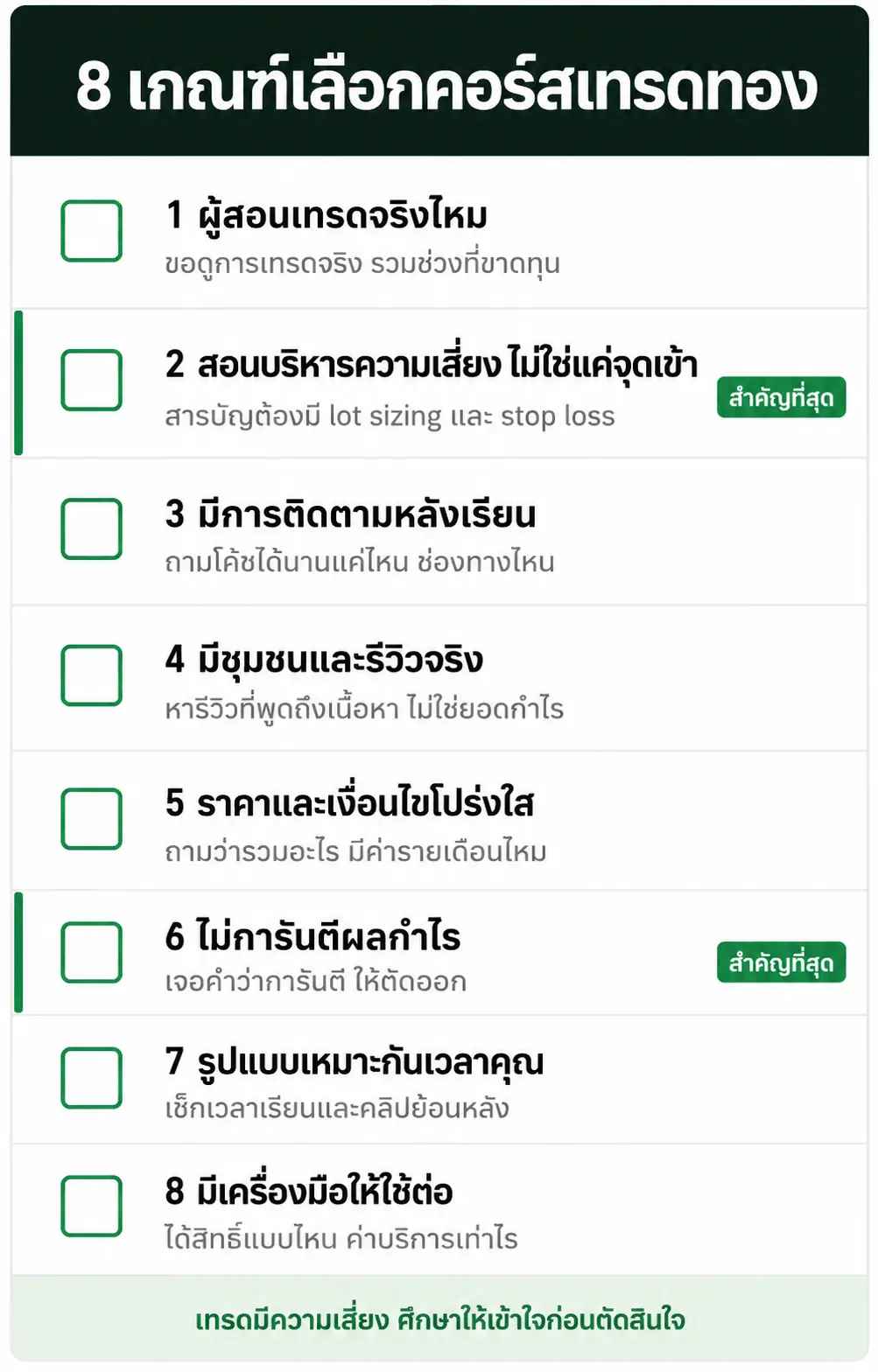
Before paying for a gold trading course, compare at least these eight factors:
The instructor's market experience
How seriously the course covers risk management
Post-course support and access to help
The quality and context of reviews
Transparent pricing and additional costs
How the provider talks about profits and guaranteed returns
The course format and schedule
Whether the course includes tools or resources you can use after learning
This guide explains how to evaluate each factor before choosing a course.
What Types of Gold Trading Courses Are Available?
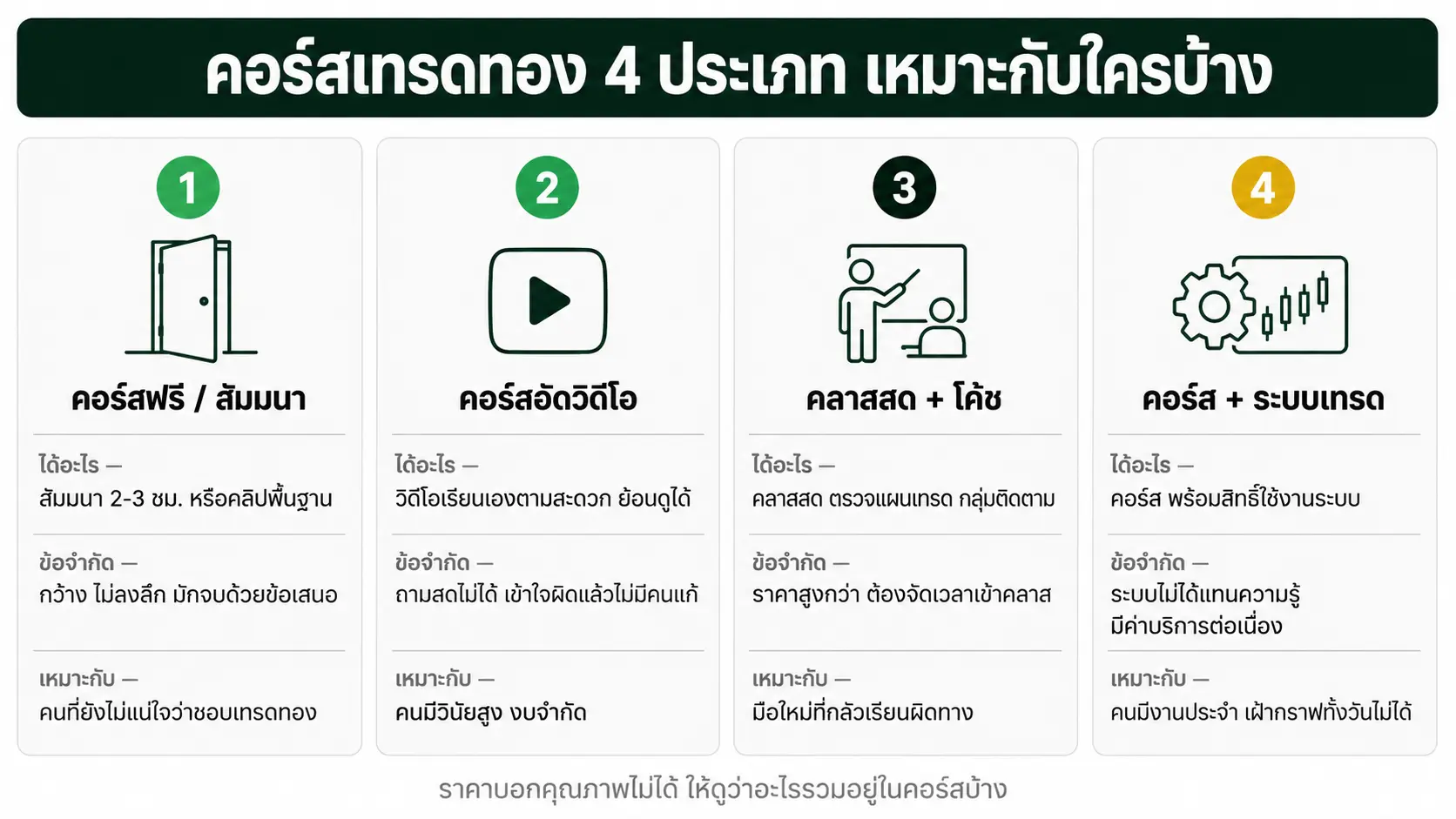 Before comparing providers, it helps to understand that different course formats suit different types of learners.
Gold trading education generally comes in several formats.
Course Format | Main Advantage | May Suit |
|---|---|---|
Free course or webinar | Allows you to explore the topic first | People who are still deciding whether trading is right for them |
Self-paced online course | Flexible learning schedule | Independent learners |
Live classes with coaching | Opportunity to ask questions | Beginners who want more guidance |
Course with trading tools | May include tools or systems for continued use | Traders looking to reduce repetitive analysis |
There is no single format that is best for everyone.
For example, someone with limited free time may prefer recorded lessons over scheduled live classes.
On the other hand, someone who already understands basic chart concepts but is unsure whether they are applying them correctly may benefit from being able to ask a coach questions.
Before looking at course providers, consider:
How much trading knowledge do you already have?
When are you realistically available to study?
Do you prefer learning independently or with guidance?
Are you looking for basic knowledge or a more specific trading skill?
8 Things to Check Before Choosing a Gold Trading Course
 1. Does the Instructor Have Relevant Market Experience?
Do not judge a course only by screenshots of profits or lifestyle content.
A more useful question is whether the instructor can explain situations that traders may actually face, such as:
Losing trades
Drawdowns
Stop Loss placement
Risk management
Situations where it may be better not to trade
Losses are part of trading.
For that reason, a responsible trading course should be able to discuss risk and losing periods, not only profitable results.
A Question Worth Asking
Does the instructor only teach where to enter, or also explain what to do when the trading idea is wrong?
The answer may tell you more about the educational approach than a collection of profitable trade screenshots.
2. Does the Course Take Risk Management Seriously?
This is one of the most important factors when choosing a gold trading course.
Knowing where to Buy or Sell is not enough if you do not understand how much you could lose when the trade goes against you.
A course should ideally cover important concepts such as:
Lot size
Stop Loss
Risk per trade
Drawdown
Margin
Leverage
Managing consecutive losses
If most of the course focuses on finding:
"high-accuracy entries"
but provides little information about money and risk management, that should be considered carefully.
An entry may tell you when to start a trade. Risk management helps define what happens when your analysis is wrong.
Read next: How Much Money Do You Need to Start Trading Gold?
3. Who Can You Ask for Help After the Course?
Understanding a concept while sitting in a class can feel very different from applying it alone to a live chart.
Before enrolling, ask what happens after the lesson ends.
For example:
Can you ask the instructor or a coach questions?
How long is support available?
Is there a member community?
Are review sessions available?
Can you access recorded lessons?
What happens if you miss a live class?
For beginners, access to guidance during the early stages may help identify misunderstandings more quickly.
However, it is important to understand exactly what type of support is included and what its limitations are.
4. What Do the Reviews Actually Talk About?
Useful reviews should provide more than profit screenshots.
Look for feedback that discusses:
The teaching method
How clearly the content is explained
Support from instructors or coaches
What students learned
Improvements in trading discipline
Who the course may or may not be suitable for
These types of reviews can provide more context about the actual learning experience.
What Should You Be Careful About?
Consider looking for more information if you only see:
Large profits
Positive account screenshots
Claims that students simply followed instructions and made money
Very short-term results
without any discussion of the learning process or associated risks.
Trading results vary from person to person, and past performance does not guarantee future results.
5. Is the Pricing Transparent?
Before paying for a gold trading course, do not look only at the advertised price.
Ask:
What is included in the course fee?
Are there additional costs?
Are there renewal fees?
How long can you access the course material?
Are trading tools included permanently or through a subscription?
Are there additional system or membership fees?
The more clearly you understand the total cost before enrolling, the easier it becomes to compare different options fairly.
Compare the Total Value, Not Just the Price
Instead of asking only:
"How much does Course A cost?"
ask:
"What do I receive after paying, and what additional costs may continue after the course?"
A course with a lower initial price may involve additional expenses later.
Another course may include learning materials, support, or tools within the original price.
The important thing is to compare the complete offering, not just the number on the price tag.
6. Does the Provider Guarantee Profits or Returns?
This is an important red flag to consider.
The gold market can be influenced by many factors, including:
Economic news
Liquidity conditions
Interest rate expectations
The US dollar
Global buying and selling activity
No instructor or training provider can control the market.
For this reason, responsible trading education should focus on:
The learning process
Market analysis
Risk management
Emotional discipline
Developing consistent trading habits
rather than guaranteeing future returns.
Claims Worth Examining Carefully
Consider asking more questions if you see claims such as:
Guaranteed monthly profits
Guaranteed recovery of your course fee
No possibility of losing
High income claims without risk discussion
Encouragement to increase lot size to generate profits faster
Trading involves risk.
A good educational program should help learners understand that risk rather than create the impression that losses will never happen.
7. Does the Course Schedule Fit Your Real Life?
A course may contain useful information, but that information may not help much if you do not have enough time to complete and practice it.
Before enrolling, check:
When are live classes held?
Does the schedule fit your routine?
Are recordings available?
How long can you access the recordings?
If you miss a class, can you catch up?
This can be especially important for people with full-time jobs.
Course Length Is Not Everything
A 20-hour course is not automatically better for you than an 8-hour course.
A shorter course with a clear structure may be more practical if:
You can complete it
You can understand the material
You have time to review it
You can continue practicing afterward
Instead of asking only:
"How many hours is the course?"
consider asking:
"Can I realistically complete this course and continue practicing what I learn?"
8. What Can You Continue Using After the Course?
Some courses may include tools or resources designed to support traders after the educational program ends.
Examples may include:
Indicators
Trading dashboards
Analysis tools
Automated systems
However, it is important to understand that different tools serve different purposes.
Indicators and Analysis Tools
These tools can help organize or display information on a trading chart.
However, the trader may still need to make the final decision.
EAs and Automated Trading Systems
Automated systems can open or manage trades according to predefined conditions.
However, users should still understand:
Lot size
Margin
Drawdown
How many orders the system may open
The level of risk created by different settings
A tool may reduce repetitive work, but it should not be treated as a guarantee of trading results.
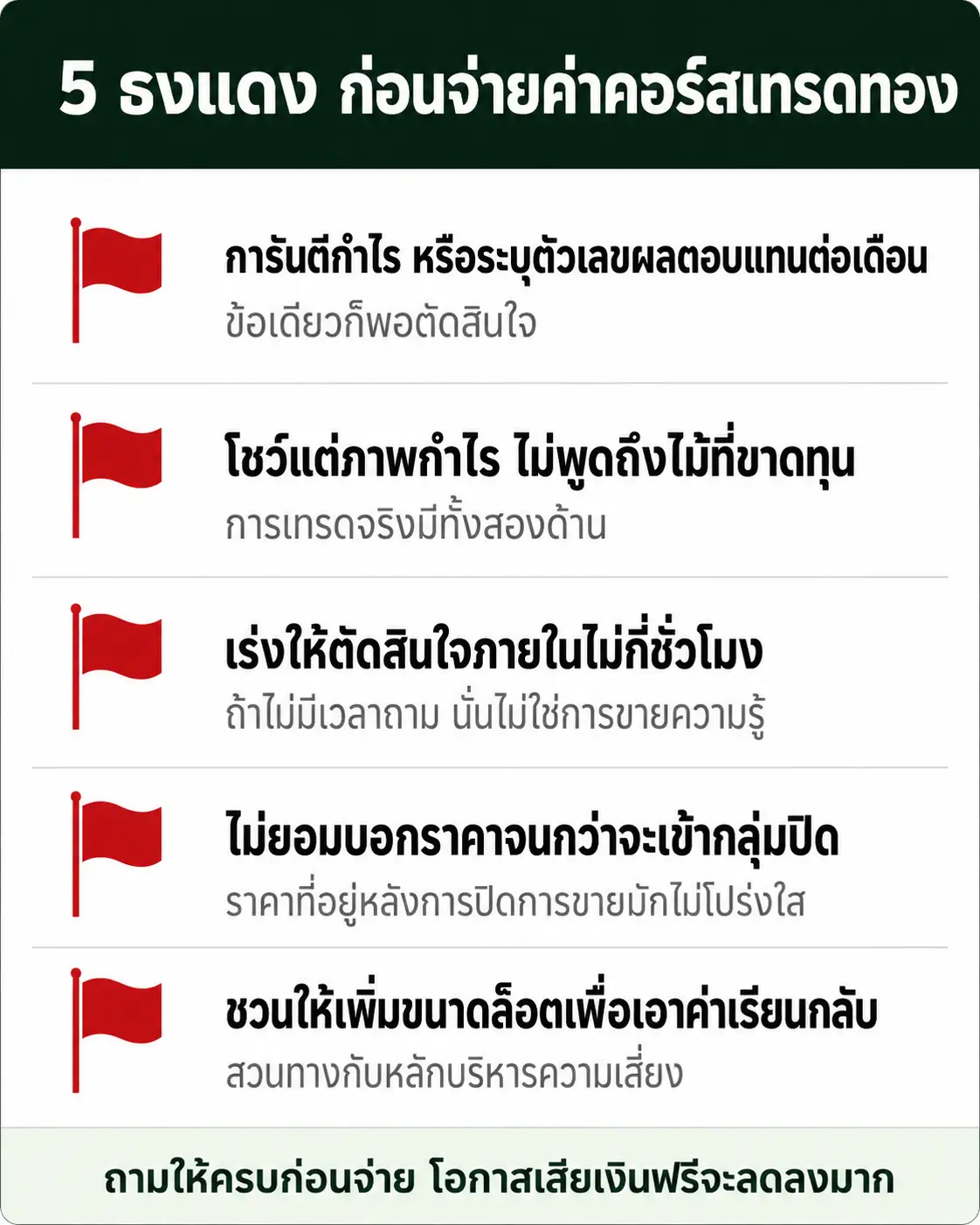
5 Red Flags to Watch for Before Enrolling
 1. Guaranteed Profits or Monthly Returns
Markets cannot be fully controlled, and future trading returns should not be presented as guaranteed outcomes.
2. Showing Only Winning Trades
A realistic educational approach should also discuss:
Losing trades
Drawdowns
Mistakes
Risk management
If you only see positive results, look for more information about the overall trading process and risk.
3. Pressure to Pay Immediately
Before enrolling, you should have enough time to review:
Course content
Pricing
What is included
Post-course conditions
Potential additional costs
Educational decisions should be based on information rather than pressure.
4. Unclear Pricing or Ongoing Costs
Make sure you understand whether there are additional expenses such as:
Renewal fees
Membership fees
Tool subscriptions
Additional courses
Transparency helps you plan your budget more effectively.
5. Encouragement to Increase Lot Size to Recover the Course Fee
This approach should be treated carefully.
Increasing your trading position size simply because you want to recover the cost of a course can change your risk management decisions.
The purpose of learning should be:
To improve your understanding and develop a process that suits you.
It should not create additional pressure to make money quickly.
7 Questions to Ask Before Paying for a Gold Trading Course
If you're still wondering how to choose the right gold trading course, use these questions to compare different providers.
1. What Kind of Market Experience Does the Instructor Have?
Look for whether the instructor can explain both profitable and losing periods.
2. How Much Does the Course Cover Risk Management?
Check whether it teaches concepts such as lot size, Stop Loss, and drawdown.
3. Can You Access Recordings?
This may be important if you have a limited schedule or could miss live lessons.
4. How Long Does Post-Course Support Last?
Ask about the available communication channels and the scope of support.
5. What Is Included in the Price?
Look at both the course fee and possible additional costs.
6. Do Any Tools Require Renewal Fees?
If the course includes tools or systems, understand the long-term cost of using them.
7. How Does the Provider Talk About Trading Results?
Responsible trading education should communicate potential returns alongside the risks involved.
If a provider can answer these questions clearly, you will have more information to make a meaningful comparison.
What Does Indy Trader Academy Focus On?
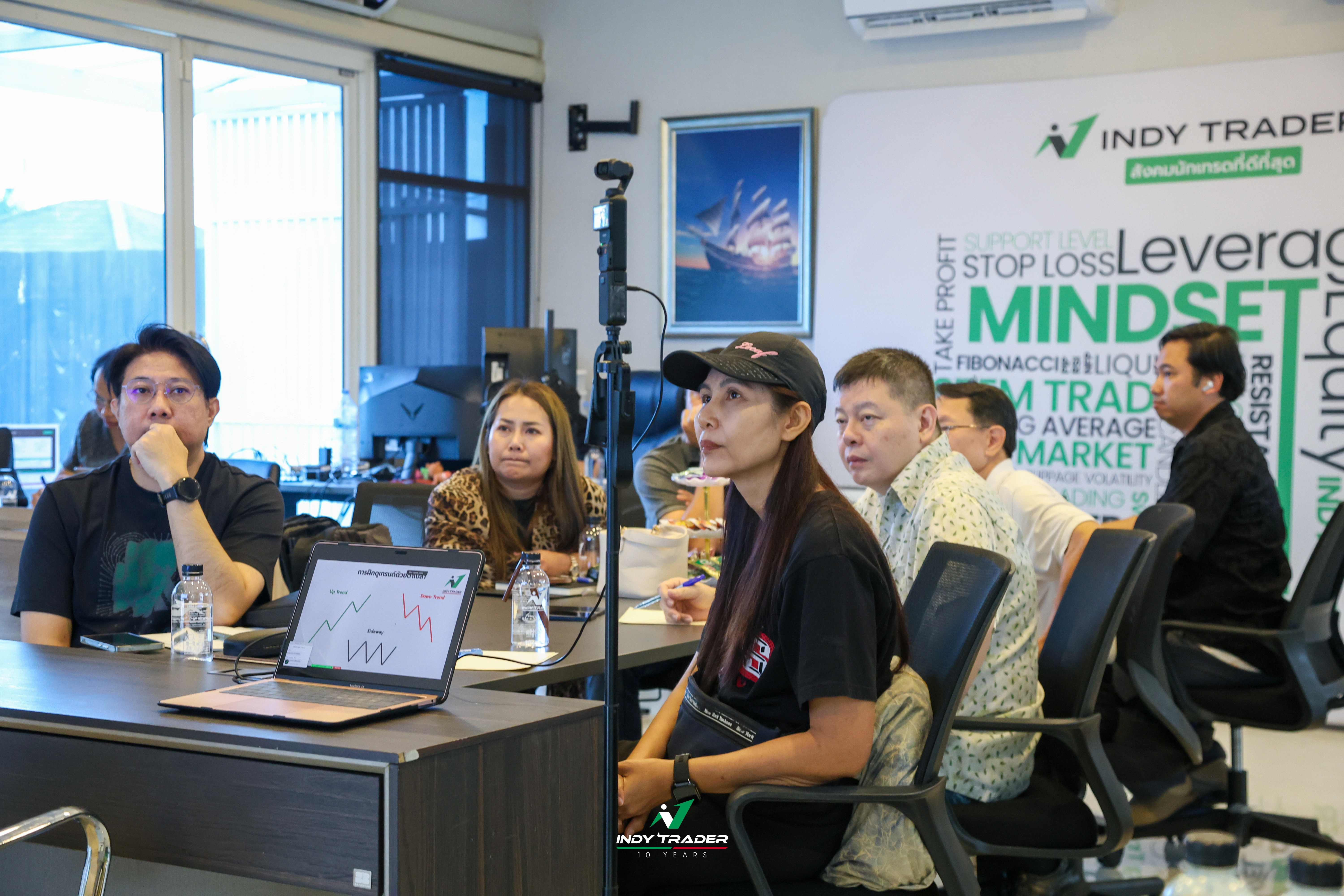


 For learners interested in gold and XAUUSD trading, Indy Trader Academy's educational approach focuses on understanding market analysis alongside risk management.
The learning process is not designed to focus only on finding entry points. It also includes concepts related to:
Market analysis
Trading plans
Lot size
Stop Loss
Margin
Drawdown
Risk management
The wider Indy Trader ecosystem also includes tools designed for traders who want support after learning.
For example, IST (Indy System Trade PRO) is an analysis tool that brings together elements such as:
Trend Lines
Support and Resistance
Multi-timeframe dashboards
Automated tools or EA-based systems can also operate according to predefined rules and settings.
However, it is important to remember:
Trading tools do not guarantee results.
Users should still understand concepts such as lot size, Stop Loss, margin, and drawdown to assess whether a particular level of risk is appropriate for their capital.
Choose a Gold Trading Course Based on What You Need to Learn
If you're still unsure where to start, begin with your current goal.
If You Are a Complete Beginner
Look for a course that covers basic concepts such as:
What XAUUSD is
How to read charts
What lot size means
How Stop Loss works
Basic risk management
Read next: How to Trade Gold for Beginners
If You Can Already Enter Trades but Your Risk Management Is Unclear
Prioritize learning about:
Position sizing
Stop Loss placement
Risk per trade
Drawdown
Read next: How Much Money Do You Need to Trade Gold?
If You're Not Sure Whether to Trade Gold or Forex
Compare the characteristics of each market first, including:
Volatility
Trading sessions
Position sizing
Factors that influence price
Read next: Gold vs Forex Trading: What's the Difference?
If You Have Limited Time
Pay particular attention to:
Course schedules
Access to recordings
How long you can access the content
Tools that may reduce repetitive work
A course that fits your real life may be more useful than one with the longest syllabus.
FAQ: Gold Trading Courses
Is a more expensive gold trading course always better?
No.
Price should be only one factor in your decision.
Compare it with:
Course content
Instructor experience
Post-course support
Learning format
Included tools
Ongoing costs
The most suitable course is not necessarily the most expensive one.
Should beginners learn gold trading online or in a live class?
It depends on your preferred learning style.
Online learning may suit people who want flexibility and can study independently.
Live classes may suit people who want opportunities to ask questions and receive guidance.
The important factor is choosing a format that you can realistically complete and continue practicing.
What should a gold trading course teach?
At a minimum, a course should help learners understand areas such as:
Chart reading
Market analysis
Trade entry and exit concepts
Lot size
Stop Loss
Risk management
Drawdown
Trading plans
A course that focuses only on entry signals without discussing risk deserves careful evaluation.
Does taking a gold trading course guarantee that you will make a profit?
No.
Education can improve your understanding of markets and trading processes, but it cannot guarantee future profits.
Results can depend on factors such as:
How knowledge is applied
Trading discipline
Risk management
Market conditions
Individual decision-making
Do I still need to learn trading if I use trading tools or automation?
Trading tools can help reduce certain types of work.
However, users should still understand:
Lot size
Margin
Stop Loss
Drawdown
Risk management
Understanding these concepts can help you evaluate the potential risks associated with a tool or automated system.
Final Thoughts: A Good Gold Trading Course Should Help You Make Better Decisions
The question:
"Which gold trading course should I choose?"
should not be answered with the name of a provider alone.
Before making a decision, use the eight criteria in this guide to compare your options.
Three areas deserve particular attention:
Risk Management + Transparency + Post-Course Support
A useful trading course should not create the impression that successful trading is only about finding the perfect entry.
It should help you understand:
How to think before entering a trade
What to do when an analysis is wrong
How to manage risk
How to develop a trading process of your own
If you are comparing different learning options, you can explore the available courses and educational resources from Indy Trader Academy to find an approach that matches your current knowledge and learning goals.
If you would like to learn more about Indy Trader Academy's courses or tools, contact the team through LINE OA @indytrader.
Risk Warning: Forex and CFD trading, including XAUUSD, involves a high level of risk. Past performance does not guarantee future results. This content is provided for educational purposes only and should not be considered investment advice.
