:format(webp))

 Many traders begin each day asking one simple question:
"Should I buy or sell today?"
However, experienced traders ask a very different question:
"If I enter this trade, where will I exit, how much am I risking, and does this setup fit my trading plan?"
That difference separates emotional trading from systematic Forex trading.
A Forex trading system is not about predicting the market perfectly. It is about following a repeatable process that removes emotion from decision making. Whether you are new to Forex or struggling with inconsistent results, building a structured trading system can help you trade with greater confidence and discipline.
In this guide, you'll learn what a Forex trading system is, its essential components, and how Indy System Trade helps traders identify market conditions while filtering out unnecessary market noise.
What Is a Forex Trading System?
A Forex trading system is a predefined set of rules that guides every trading decision.
Instead of making impulsive trades based on emotions or market hype, a trading system tells you:
When to enter a trade
When to stay out of the market
Where to place your Stop Loss
When to take profits
How much capital to risk on each trade
The goal is consistency, not perfection.
Even professional traders experience losing trades. The difference is that their decisions follow a structured process rather than emotions.
Trading Strategy vs. Forex Trading System
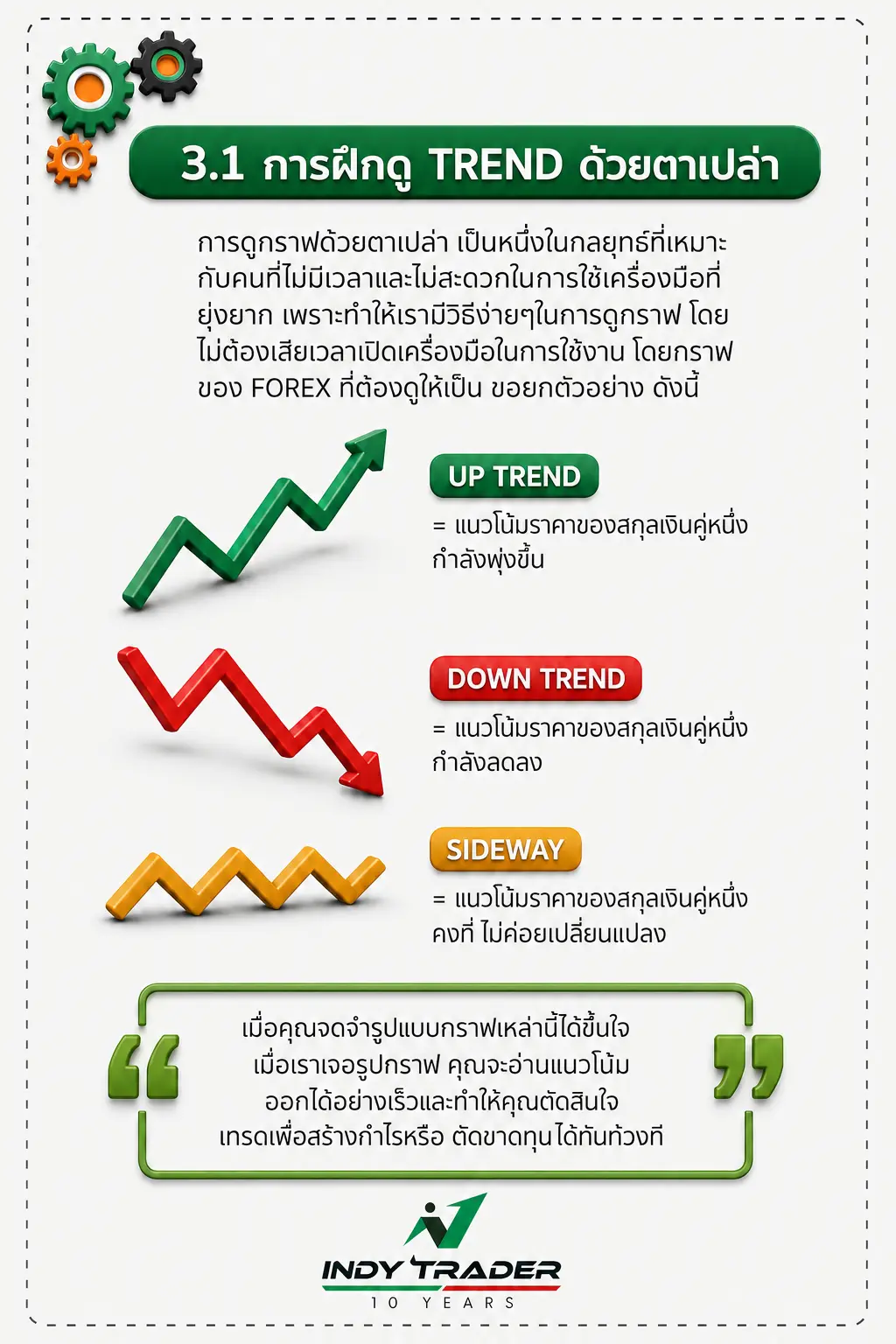 Many beginners confuse a trading strategy with a complete trading system.
A trading strategy is simply one method for finding trade opportunities.
Examples include:
Price Action
Fibonacci Retracement
Support and Resistance
Harmonic Patterns
Moving Averages
Breakout Trading
A Forex trading system goes much further.
It combines your strategy with clear rules for:
Market analysis
Entry conditions
Stop Loss placement
Profit targets
Position sizing
Risk management
Trade review
Think of a strategy as one tool in your toolbox. A trading system is the entire workflow that keeps every decision consistent.
The Five Essential Components of Every Forex Trading System
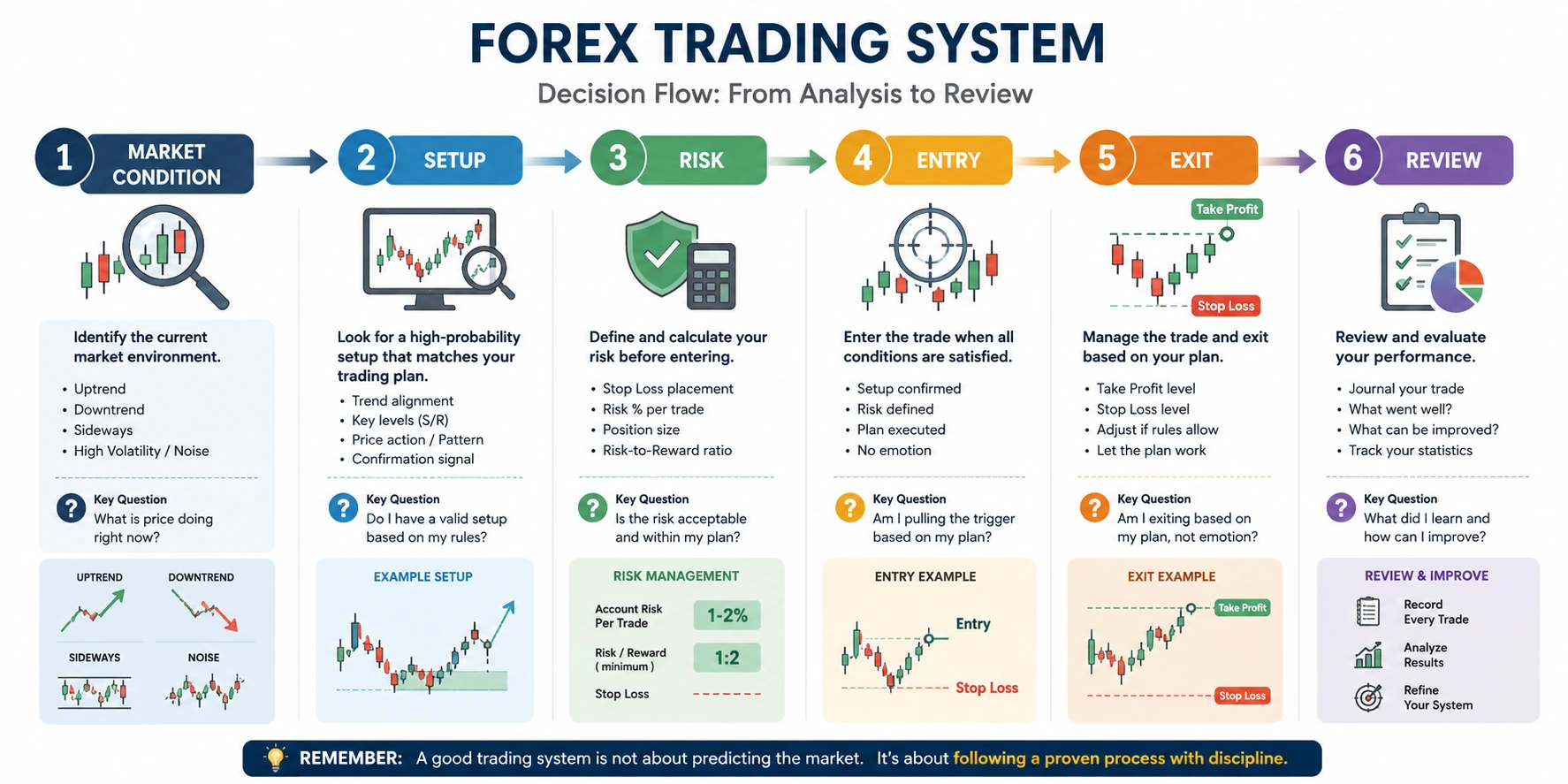 1. Market Condition
Every trade begins by understanding the current market environment.
Ask questions such as:
Is the market trending?
Is it moving sideways?
Is volatility unusually high?
Is the market full of noise?
Trading the wrong strategy under the wrong market conditions is one of the biggest reasons traders lose consistency.
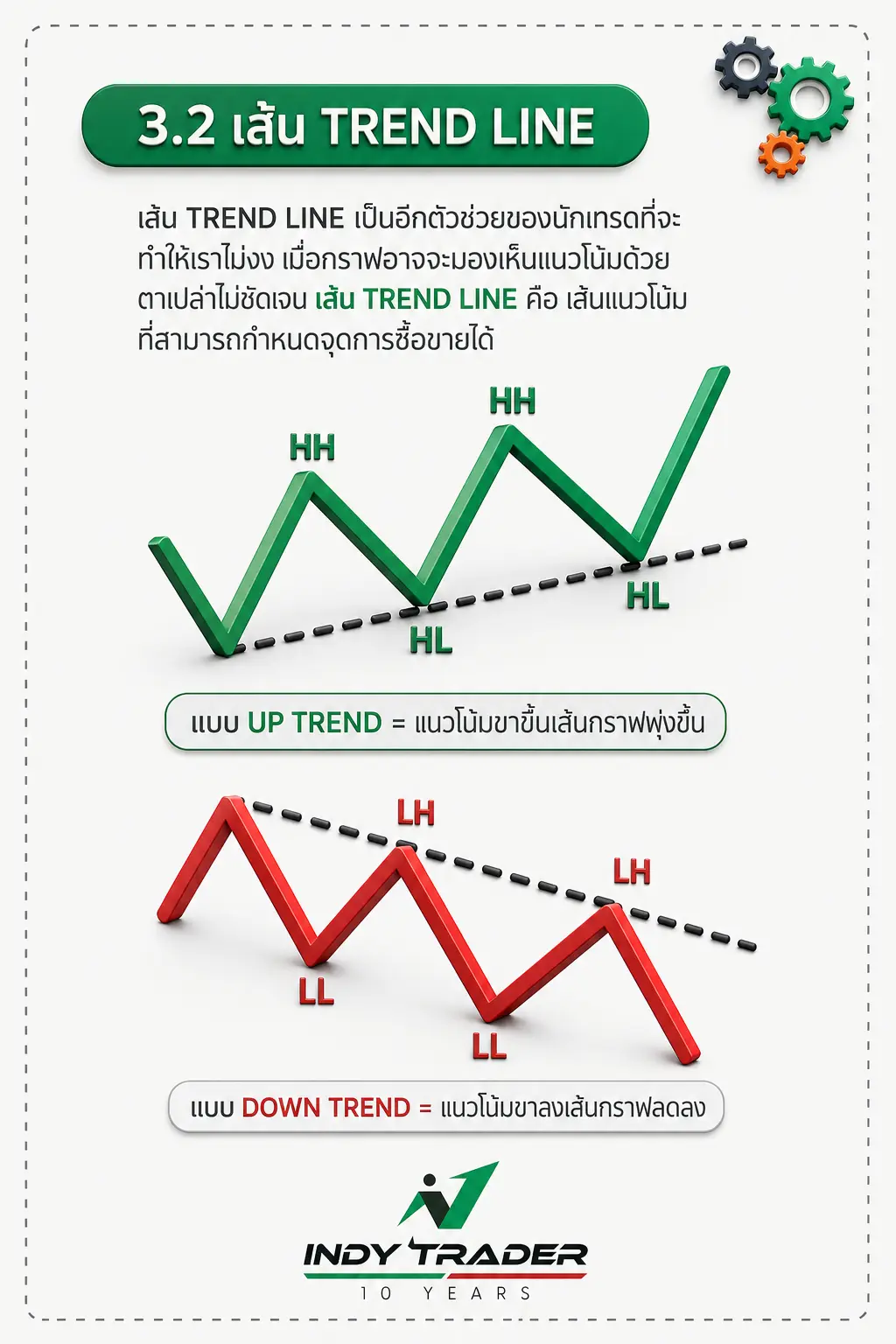 2. Entry Rules
Your system should define exactly when a trade qualifies.
Examples include:
Trend confirmation
Support or resistance reaction
Candlestick confirmation
Acceptable risk-to-reward ratio
If the setup does not meet every rule, the trade should be skipped.
Removing subjectivity is one of the biggest advantages of systematic trading.
3. Stop Loss
Every trade needs a predefined exit if the market moves against you.
A Stop Loss is not a prediction that you will be wrong.
It is simply protection for your trading capital.
Successful traders focus on protecting capital first because opportunities will always return.
4. Take Profit
Knowing when to exit is just as important as knowing when to enter.
Without predefined profit targets, traders often:
Close winning trades too early
Hold losing trades too long
Let emotions control every decision
A structured trading plan removes this uncertainty.
5. Position Sizing
Even the best trading system can fail if position sizes are too large.
Professional traders typically risk only a small percentage of their account on each trade.
This allows them to survive losing streaks while staying consistent over the long term.
Risk management is what keeps traders in the market long enough for their edge to work.
Why Do Two Traders Using the Same Strategy Get Different Results?
It is common for two traders to learn the exact same strategy and achieve completely different outcomes.
The reason is rarely the strategy itself.
Instead, it often comes down to execution.
Common mistakes include:
Lack of Discipline
Knowing the rules but failing to follow them.
Overtrading
Taking trades that do not meet the system requirements simply because the market looks active.
Constantly Changing Systems
Many beginners abandon their strategy after only a few losing trades instead of collecting enough data to evaluate performance.
Poor Risk Management
One trader may risk 1 percent per trade while another risks 10 percent.
Over time, the results become dramatically different.
Consistency comes from consistently following the process.
How Indy System Trade Helps Traders Filter Market Noise
One of the hardest parts of Forex trading is identifying when the market offers high-quality opportunities.
Many traders mistake random price movement for strong trading signals.
Indy System Trade is designed to help traders identify overall market direction while filtering unnecessary market noise.
Rather than chasing every price movement, traders learn to:
Evaluate market conditions first
Identify high-probability trade setups
Manage risk before entering
Follow a structured decision-making process
This approach encourages patience and discipline instead of emotional trading.
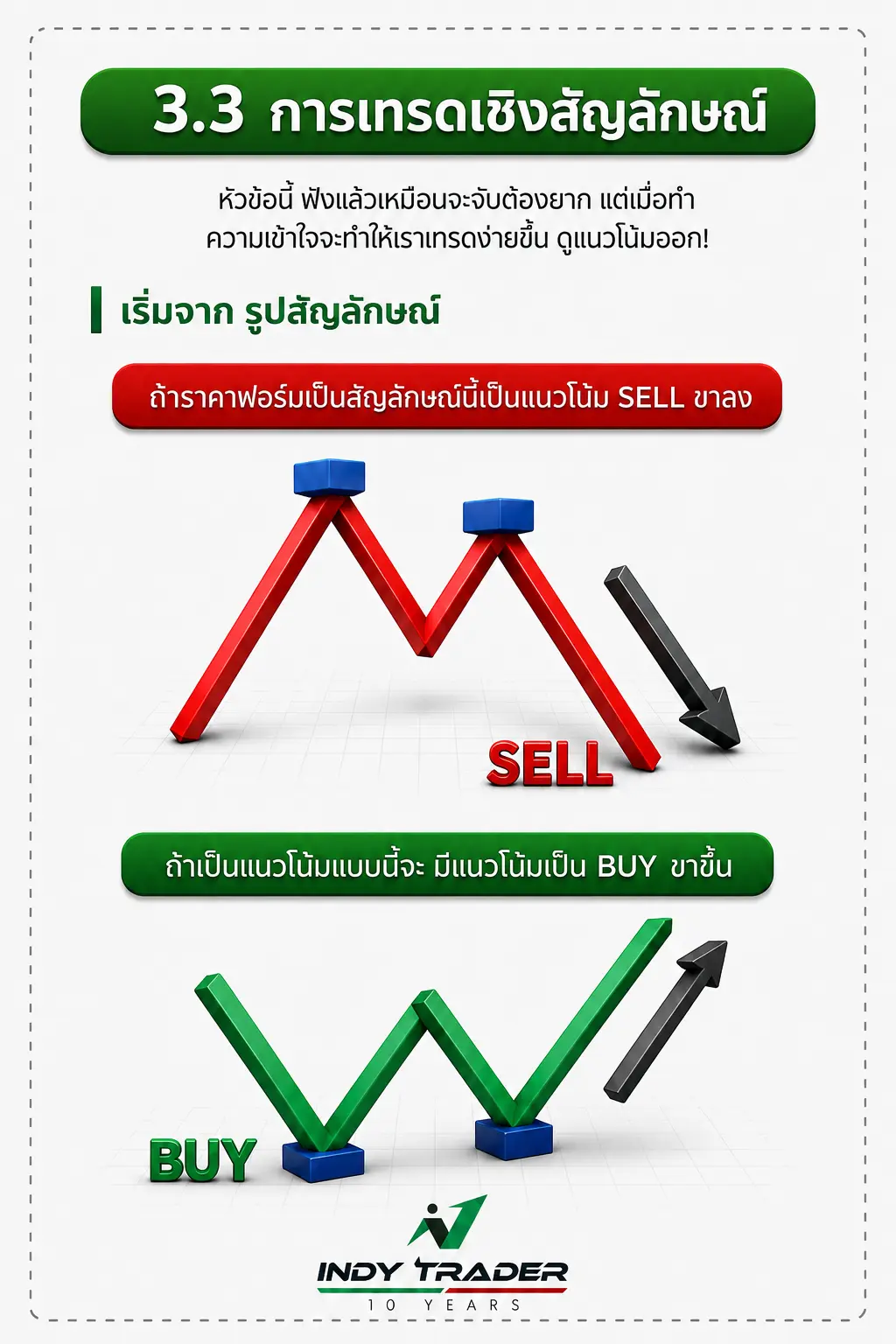 A Simple Pre-Trade Decision Process
Before entering any trade, ask yourself:
What is the current market condition?
Does this setup match my trading rules?
Where is my entry?
Where is my Stop Loss?
How much am I risking?
Does the reward justify the risk?
If this trade loses, will my account still be healthy?
If you cannot confidently answer every question, waiting is often the better decision.
Professional traders know that protecting capital is also a winning strategy.
 Why Every Trader Needs a Trading Journal
A Forex trading system is only as good as the data used to improve it.
Keeping a Trading Journal allows you to record:
Entry and exit reasons
Market conditions
Chart screenshots
Stop Loss and Take Profit levels
Trade outcomes
Lessons learned
Over time, patterns become clear.
You'll discover which setups consistently perform well, which mistakes repeat themselves, and how your decision making improves through experience.
The best traders review their trades just as seriously as they place them.
Why CEO Beer Emphasizes a Forex Trading System
According to CEO Beer, founder of Indy Trader Academy, one of the most important foundations of successful trading is having a well-defined Forex Trading System. Long-term success is not about predicting every market move correctly—it comes from following a repeatable process with clear rules for market analysis, trade entries and exits, and risk management. Whether you are a beginner or an experienced trader, developing a trading system that matches your own style can help reduce emotional decision-making, improve consistency, and build confidence over time. This systematic approach is a core principle behind the education and trading methodology that CEO Beer shares with students at Indy Trader Academy.
Final Thoughts
A successful trader is not someone who predicts every market move correctly.
A successful trader follows a structured Forex trading system, manages risk carefully, and remains disciplined regardless of market conditions.
When you stop relying on emotions and start following a repeatable process, your trading becomes more consistent and sustainable.
Building a trading system takes time, but it creates the foundation for long-term success.
Build Your Own Forex Trading System with Indy Trader
If you want to trade with greater confidence, consistency, and discipline, learn how to build a structured trading system with Indy System Trade.
Discover how to analyze market conditions, filter noise, manage risk, and develop a repeatable trading process that fits your trading style.
Frequently Asked Questions
What is a Forex trading system?
A Forex trading system is a structured set of rules that defines when to enter trades, where to exit, how to manage risk, and how much capital to allocate for each position.
Is a trading strategy the same as a trading system?
No. A trading strategy identifies trading opportunities, while a trading system includes strategy, risk management, position sizing, and trade evaluation.
Why is risk management important?
Risk management protects your trading capital and allows you to stay in the market long enough for your strategy to perform over time.
Do I need indicators to build a trading system?
Not necessarily. Many successful traders build profitable systems using price action and market structure without relying on numerous indicators.
Why should I keep a trading journal?
A trading journal helps you identify strengths, eliminate recurring mistakes, and continuously improve your trading performance based on real data.
Related Articles & Forex Courses
If you're building your knowledge step by step, continue with our related Forex guides to strengthen your trading foundation. Learn What Is Forex? if you're just getting started, discover how Risk Management protects your trading capital, understand the importance of Trading Psychology, and explore topics such as Support and Resistance, Fibonacci Trading, and Supply and Demand. Once you're comfortable with the fundamentals, take the next step by exploring our Forex Trading Courses, where you'll learn how to build a complete trading system, manage risk effectively, and apply proven trading techniques with guidance from Coach Beer.
Risk Disclaimer: Forex and CFD trading involve significant risk and may not be suitable for every investor. Past performance does not guarantee future results. Always understand the risks involved and trade responsibly.
